

DD Provider Onboarding Program
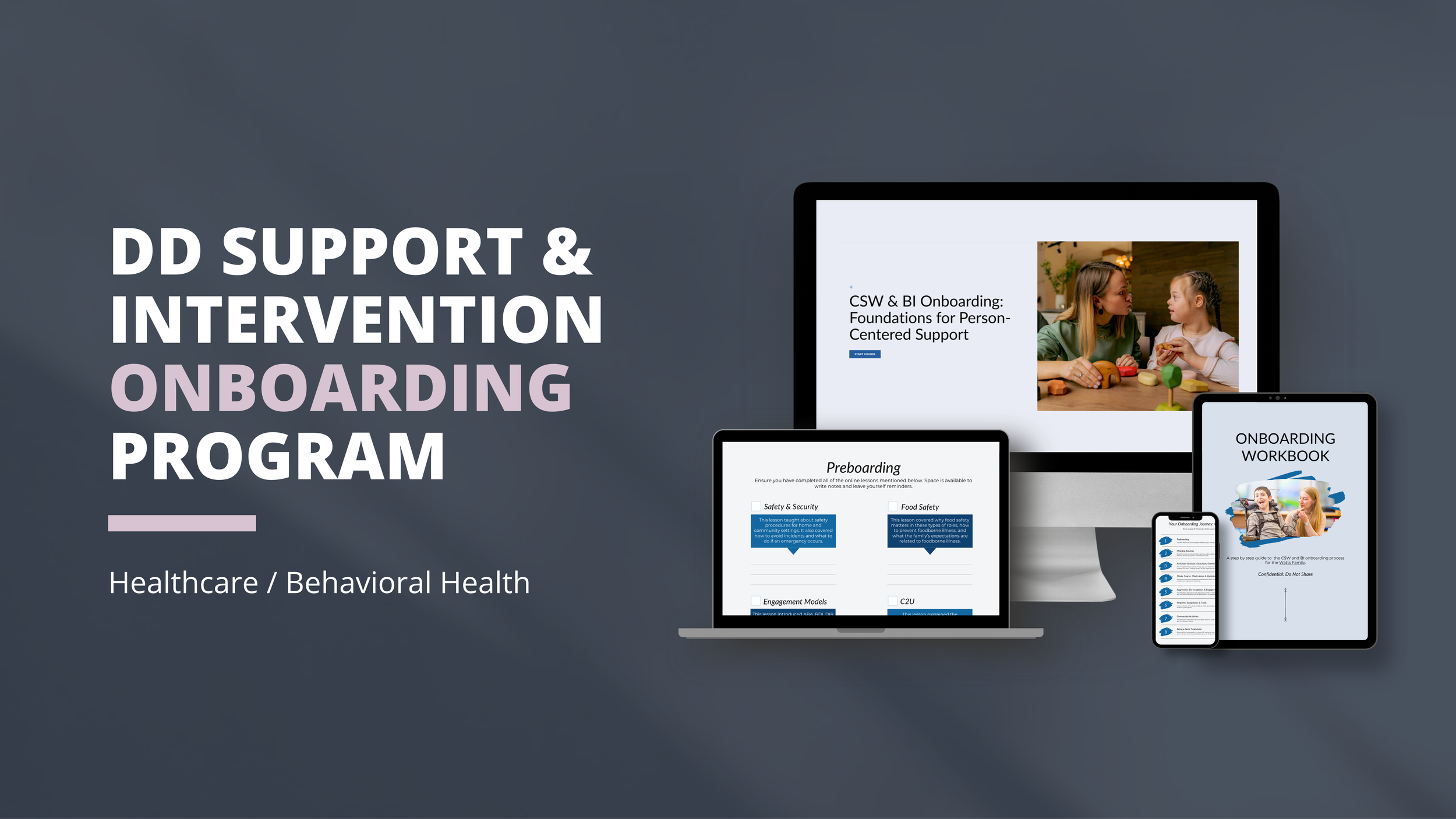
The New Preboarding Course (1 of 3)
Snapshot
A few years ago, I developed an Articulate Rise onboarding course for a small team of Behavioral Interventionists and Community Support Workers. The team needed to add content to the course, and had some emerging performance challenges they wanted to address through a course revision. Through the discovery process, I realized they needed a multi-phase blended learning experience to avoid cognitive overload, and to allow safe productive struggle before sharing certain topics. The result was a 4+ week training program comprised of three self-paced courses, 3 weeks of on-site coaching with Gradual Release of Responsibility (“I Do, We Do, You Do”), a learner workbook, a facilitator guide, and on-site job aids.
I created the new courses in Genially, as this offered interactivity (similar to Rise) without the hefty subscription each time they needed an update. The team also wanted a new, brighter (less corporate) design, so we used 3D cartoon-like graphics for the topic introduction and learning objective pages.
Challenges: Cover an extensive amount of content without causing cognitive overload. Enable productive struggle to deepen learning. Resolve common performance issues through training. Avoid costly Articulate subscription, if possible.
Audience: Community Support Workers (CSWs) and Behavioral Interventionists (BIs) serving a cognitively disabled individual with extensive needs. CSWs typically have not completed any formal education while BIs have graduate degrees and hours of behavioral training. Digital skills ranged from none to intermediate level.
Strategy: To expand topic coverage, without overwhelming new hires, I aligned each module and activity with the recurring performance gaps and sequenced learning logically. Lessons included use of progressive disclosure, signaling, dual coding, priming, and bridge to (field) performance using the learner workbook. On site, Gradual Release of Responsibility and productive struggle build real-world judgment and learner appetite (readiness) for subsequent course lessons. The new program was tested by team SMEs and iterated according to their feedback.
Impact: Team members felt more confident and capable in their roles, completed tasks more accurately, and better supported the individual to achieve his goals.
The Original Rise Course
Process
Analysis & Design
With an accelerated timeline (a functional first iteration needing to be ready within one week), I quickly met with the current team and discussed the instructional problem, learner personas, and their needs. There was not time to conduct full analyses or to produce new topical videos or job aids, so we worked with the content and tools they had on-hand (with future plans to revise the videos and resources).
It was determined that a blended learning experience was optimal to: 1) avoid cognitive overload, 2) combat the forgetting curve, 3) reduce the time demand on trainers, and 4) ensure learning consistency.
There was a long-standing issue of training inconsistency, since each trainer found different topics to be most relevant and the client’s behaviors often influenced the day’s activities. By covering all of the key topics in an online preboarding course, learners would be through the “Understand” level of Bloom’s Taxonomy and ready for the “Apply” level when arriving on-site.
I determined the topics for each part of the program (e.g., course, ILT, workbook) by interviewing all current trainers and recent learners. From there, the team discussed which topics were best addressed in-person and which should be covered in preboarding. It was decided that a workbook with checklists would be helpful to ensure that all topics were adequately covered (since ILT is delivered while the trainer is also caring for the client). The workbook also provided space for the individual’s notes and an organized way to track their learning journey.
Trainers needed a way to know which topics they should cover that day, since they could be the first, second, or third person guiding the new hire. Sometimes, they would need to start with the basics and other times they needed to avoid redundancy. Without a way to know what topics were covered by other trainers, they had to repeatedly ask the new hire what they had already learned. There was not time or money for a Train the Trainer course, so a facilitator’s guide was selected instead.
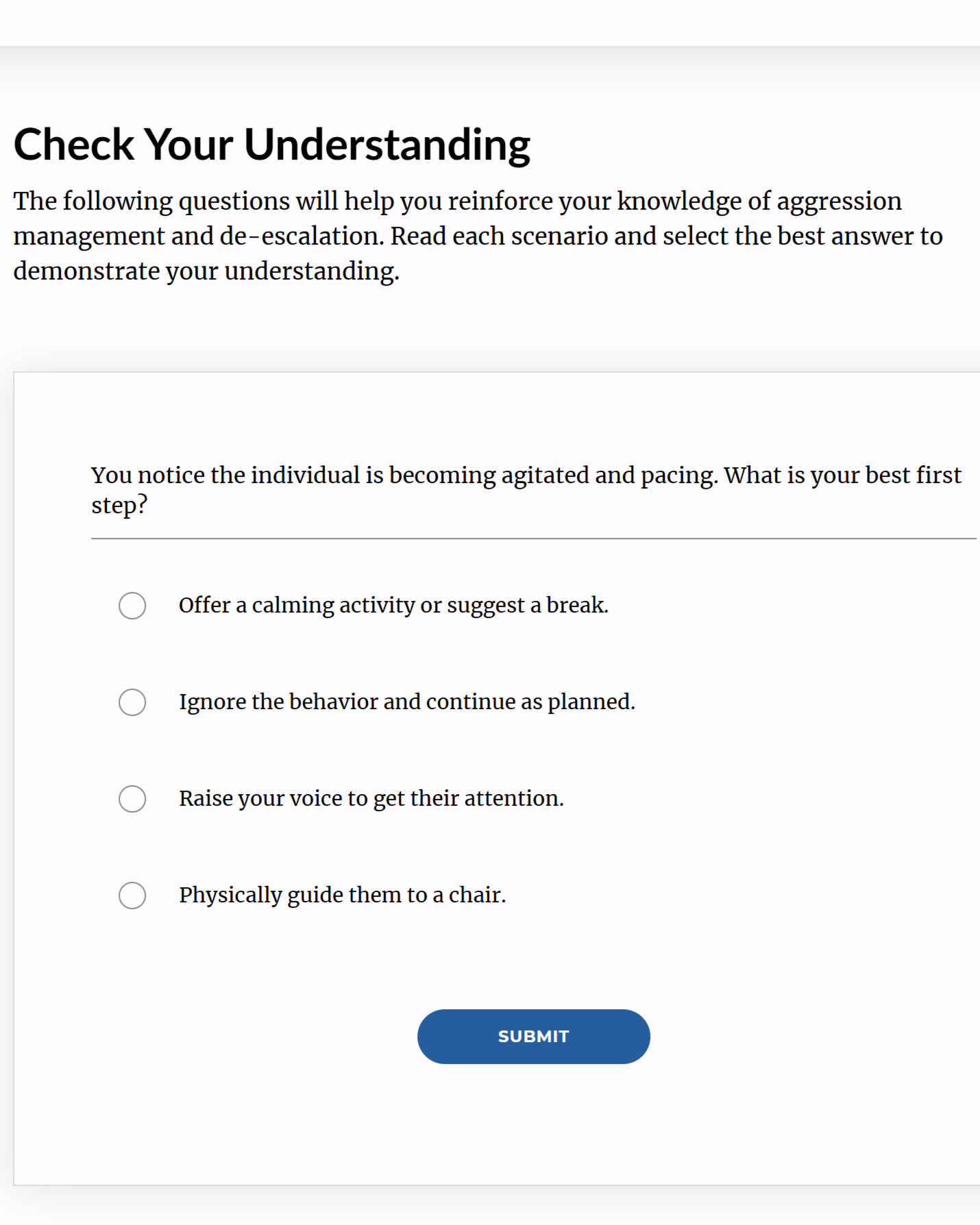
The preboarding course was developed in Articulate Rise, due to the limited amount of development time and need for integrated multimedia and assessments. I leveraged Rise’s Artificial Intelligence (AI) features to flesh out each preboarding course topic and to suggest interactive elements that aligned with the content.
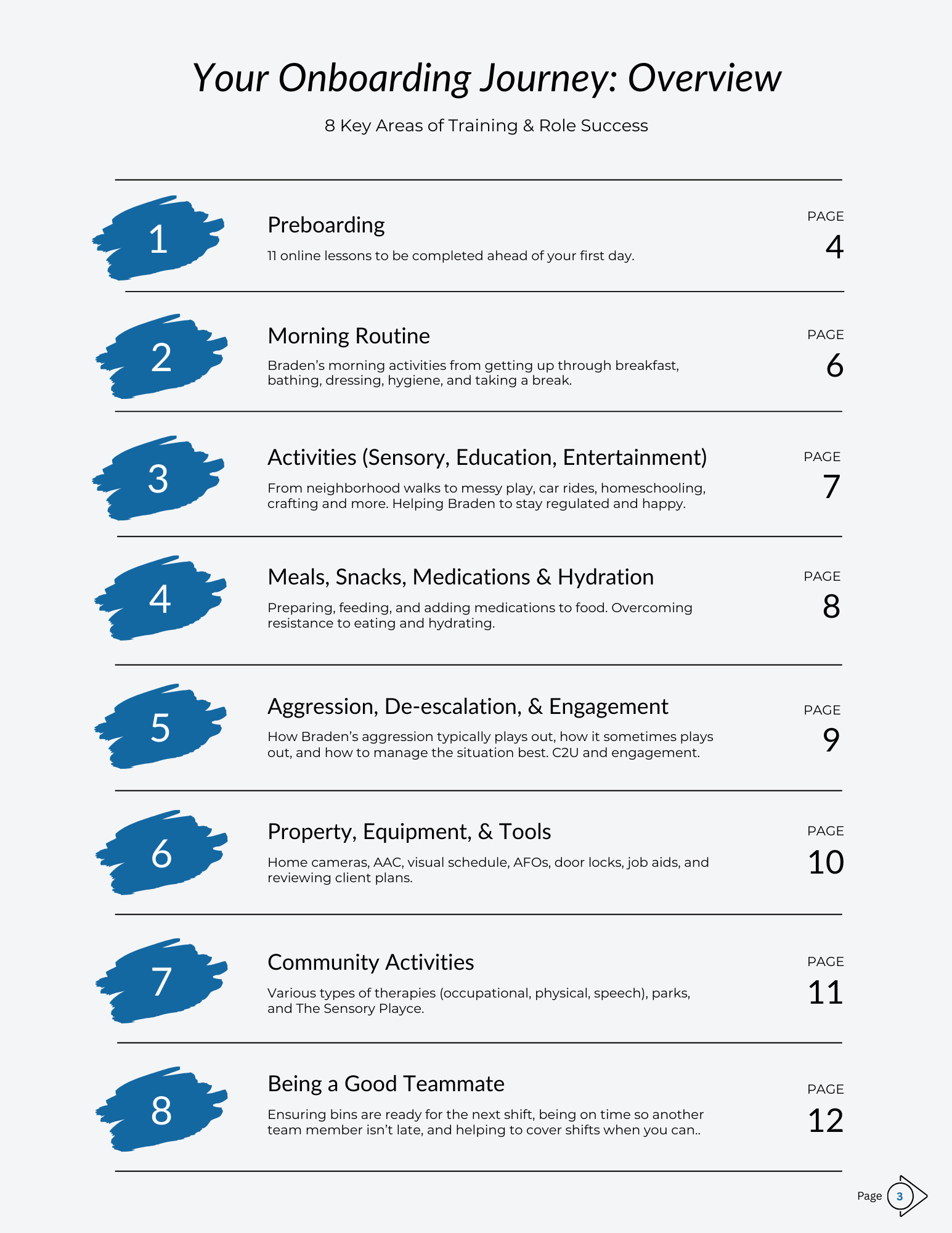
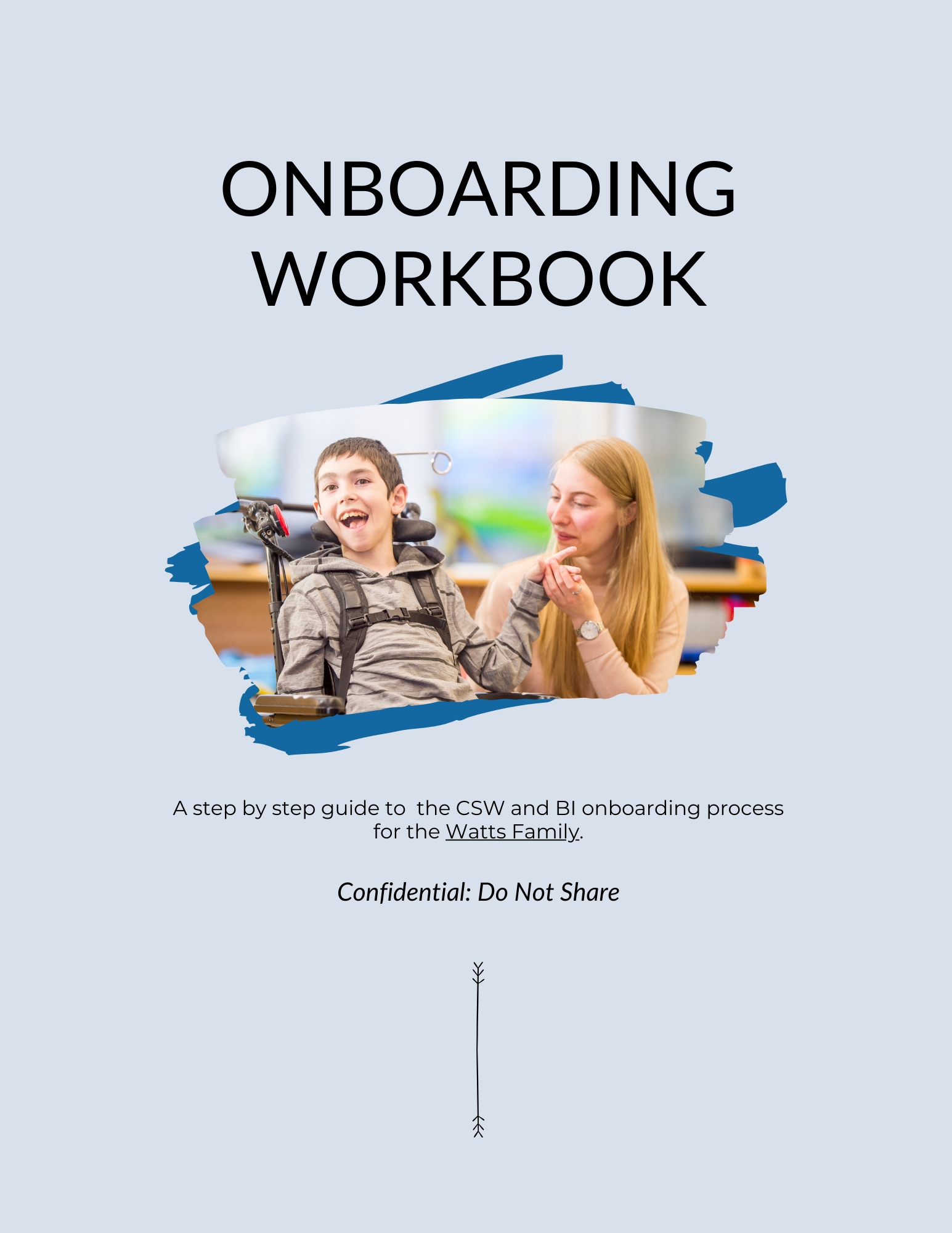
I used Canva to create the workbook and facilitator’s guide (for the ILT segment). To the right are a couple pages of the 13-page workbook.
It was decided that ongoing professional development would be delivered through team meetings (with a behavioral supervisor) and individual meetings with the on-site employer.
Development
Learners needed to be able to access the preboarding course from any location (e.g., work, home, mobile device, library) and the client did not have the budget for an LMS, so the Rise course was hosted via Google Cloud and the employer’s website. New hires are sent a link to the course and cannot proceed to subsequent lessons without successfully passing the current lesson assessments. This ensures that learners have mastered the key concepts of each lesson.
While this option will not provide digital footprint data (like learner pace, attempt patterns, rewatch rates, stall points, scroll depth, or click tracking), course efficacy will be evaluated by the on-site trainers as they see how prepared new hires are on their first day. This data will be tracked and used to determine future iterations of the preboarding course.
Implementation & Evaluation
Skills Used
Articulate Rise
Articulate 360
Google Console
Canva
Iterative Design
Curriculum Development
E-Learning
Empathetic Design
Bloom’s Taxonomy
Gagne’s Nine Events
Rapid Development
Process Mapping
SME Interviews
Webpage Development
Accessibility