

MyPro Resume Writers’ Training Program

Snapshot
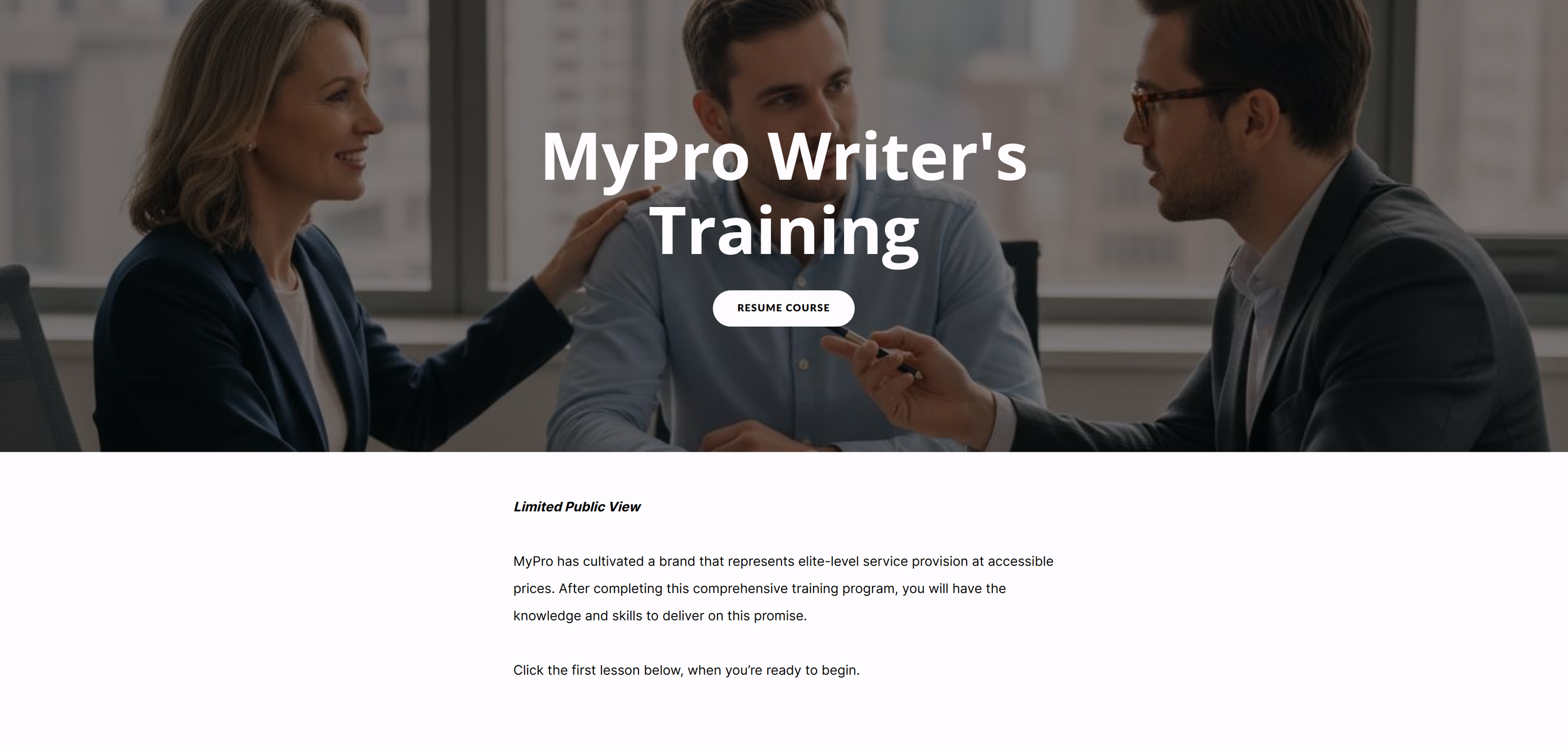
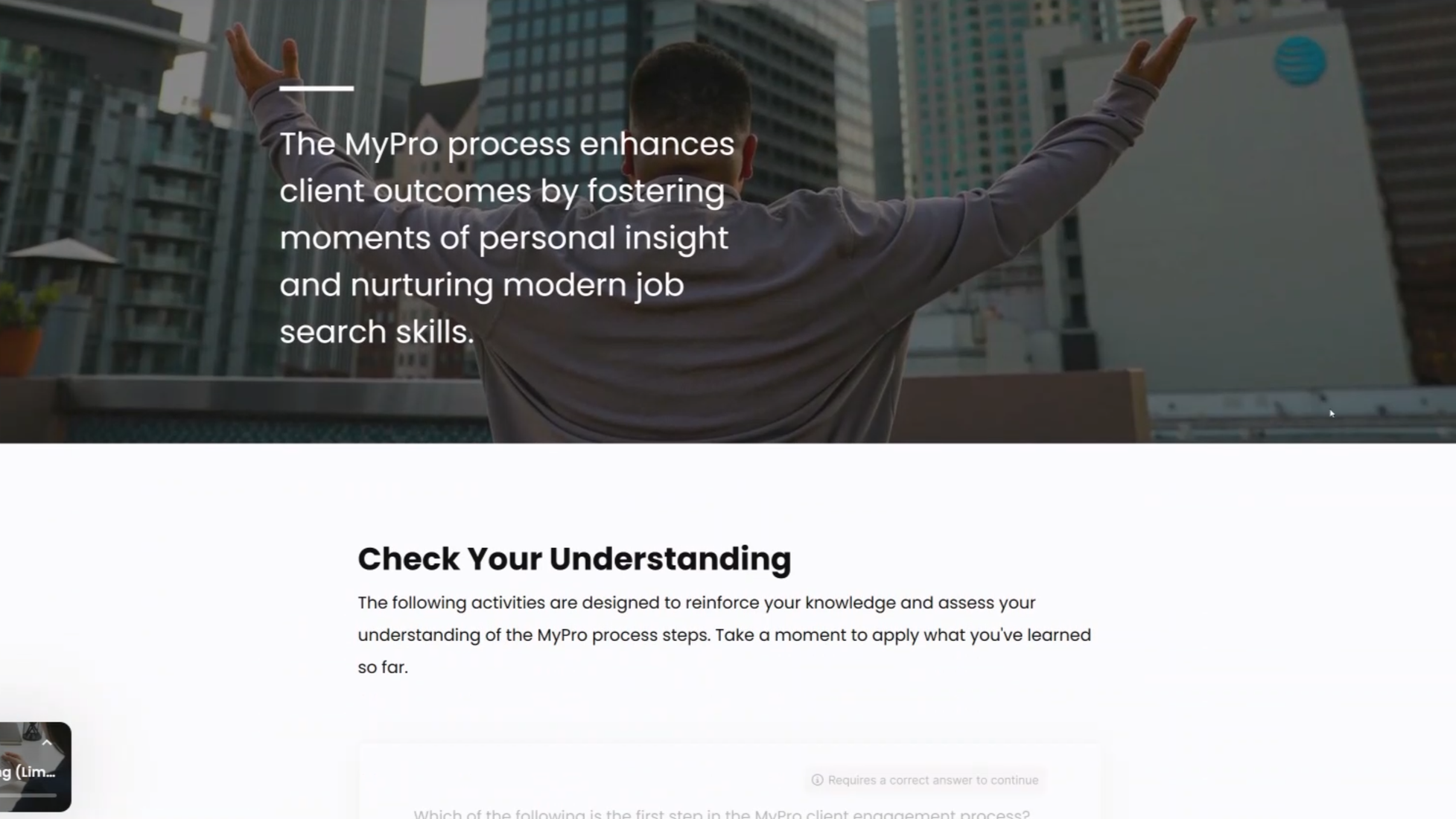
This combined onboarding and training program was designed for newly hired professional resume writers working for a boutique resume firm. The curriculum bridges the gap between subjective decision making and standardized quality expectations. Built using Backward Design, the program combines interactive self-paced modules, real-world drafting exercises, and iterative feedback loops to increase knowledge transfer, customer outcomes, and long-term contractor retention. The video to the right shows a quick run-through of the first three modules. (The entire program is not shared to protect proprietary information.)
Challenge: Define, articulate, and teach a highly subjective and ambiguous decision-making process to enable better alignment with company writing standards and improve contractor retention.
Audience: New-to-the-organization resume writers (primarily contractors). Learners ranging from entry-level writers to seasoned industry veterans, presenting a wide variation in background knowledge, writing styles, and prior instructional experience.
Strategy: Employed Backward Design to clarify performance standards. Identified explicit evidence of competency, created targeted modules, and iterated both lesson structures and rubric evaluations until contractor outputs consistently matched the firm’s quality baselines. Rather than a typical (6th to 8th grade) level of language, elevated the prose to an academic standard using vivid, sophisticated adjectives designed to engage a highly literate audience.
Impact: Writers produced higher-quality resumes that aligned with company standards and leadership was able to focus less on training and more on operations.
Process
Analysis & Design
The primary challenge was translating an inherently subjective process - crafting high-impact career narratives - into a structured, repeatable framework without stifling writer creativity.
The secondary challenge was ensuring that all writers adhered to each step in the company’s desired client journey. Some of these tasks were very clerical in nature and, therefore, historically skipped by these highly creative learners.
Target Compentencies: Defined what “mastery” looks like by breaking down workflow steps and senior-level decision-making processes into explicit criteria that could work across client fields and industries.
Backward Design Framework: Started with the desired outputs (consistent client data for metrics, a professional client experience, client-ready resume drafts meeting specific formatting, role-alignment, and visual design benchmarks) and built rubrics around these best practices.
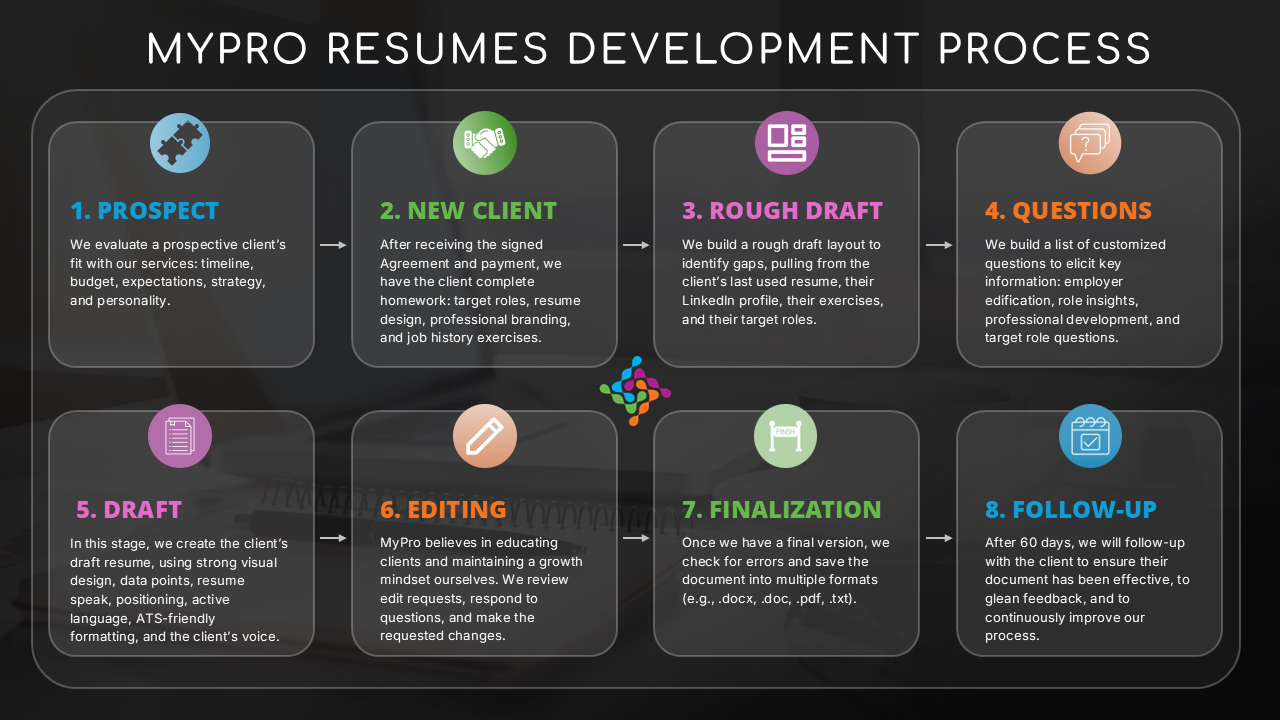
Process Mapping & Optimization: Formalized company client selection and resume development processes to determine the optimal ordering of tasks.
Outline & Chunking: Constructed a course outline to begin breaking content into manageable chunks of information with a logical flow.
Assessment & Transfer: Ideated a companion project in which the learner receives a simulated client scenario (raw resume, target job postings, and client responses). The learner analyzes and applies the discussed activities for each step in the process, immediately after completing the self-paced lesson. They submit their work for technical and subjective decision evaluation by an expert writer. These gated milestones ensure that writers achieve the standard at each critical phase before advancing to the next. Expert reviewers provide rapid-feedback loops within 24-48 hours, referencing the rubric and accelerating time-to-proficiency.
Flexible Delivery: Accomodated diverse learner backgrounds by structuring content into bite-sized, self-paced, repeatable modular lessons with actionable job aids and resources.
Development & Iteration
Rather than relying on passive reading, the curriculum prioritizes practical application and rapid feedback:
Real-World Scenarios & Examples: Fleshed out authentic client intake case studies for writers to analyze, outline, and work with throughout training.
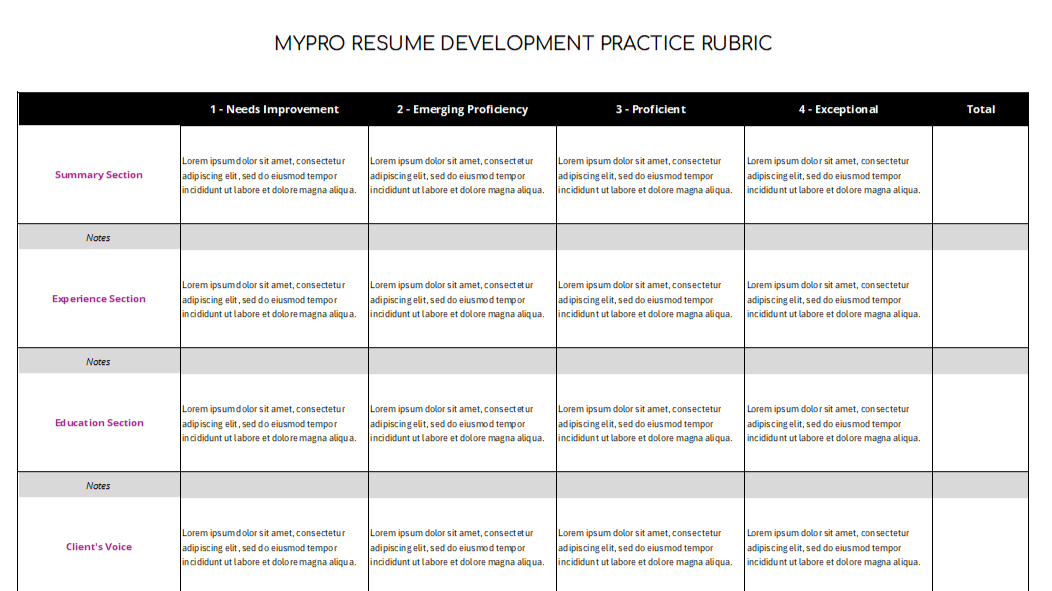
Iterative Evaluation: Created standardized evaluation rubrics for mentors and instructional leads to provide consistent and actionable feedback. Revised rubrics and lessons throughout testing and initial use.
Continuous Improvement: Used performance data from initial writer outputs to refine lessons, clarify ambiguous instructions, and update resources in subsequent iterations.
Results & Impact
Systematized the firm’s proprietary writing methodology, translating expertise into clear, repeatable writer decisions. Resolved early contractor churn by providing clear expectations, easily accessible resources, and constructive feedback during the critical onboarding window. Reduced the number of review and edit cycles needed from senior staff, allowing new hires to reach full independence faster.
Skills Used
Articulate Rise
Canva
Freepik (Magnific)
Movavi Video Suite
Adobe Photoshop
Iterative Design
Process Mapping
Workflow Optimization
Resource Development
Backward Design
Blending Learning
Learning Experience Design